Implementation of Problem-Based Learning to Enhance Students’ Critical-Thinking Activities in Chemistry Learning: A Classroom Action Research at SMAN 1 Pancung Soal
DOI:
https://doi.org/10.47945/search.v5i1.3281Abstract
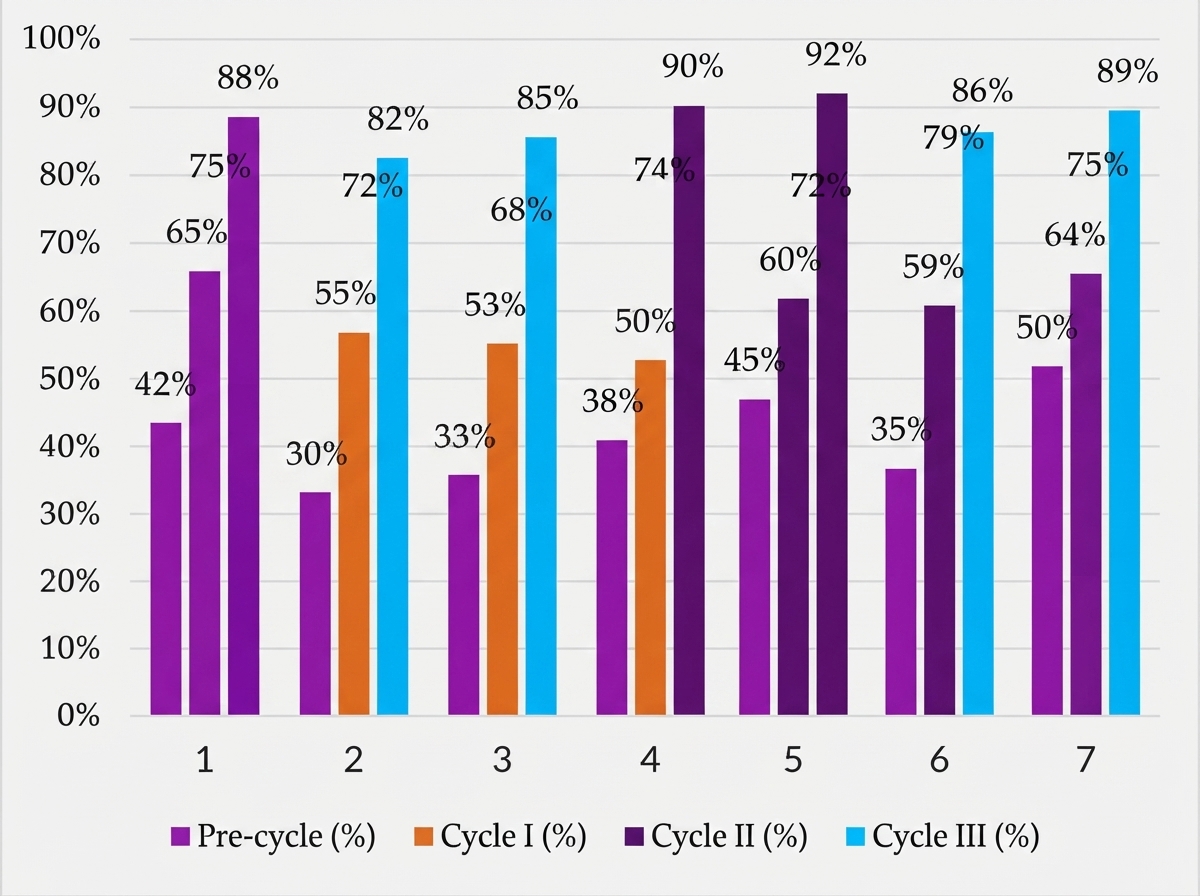
Critical thinking is a crucial skill in chemistry education as it supports students' abilities to analyze, evaluate, and solve problems logically, and it is commonly fostered through learning activities such as questioning, discussion, and collaborative problem-solving. Preliminary observations revealed that the majority of Grade XI (Phase F) students at SMAN 1 Pancung Soal demonstrated low levels of engagement in discussions, questioning, and the analysis of contextual chemistry problems. This situation highlights the need for a learning model capable of enhancing these critical-thinking-supporting activities. This study aimed to describe the implementation of the Problem-Based Learning (PBL) model and examine the change in students' learning activities that support critical thinking during chemistry instruction. The study employed a Classroom Action Research (CAR) design following the Kemmis and McTaggart model, conducted over three cycles with 36 Grade XI (Phase F) students at SMAN 1 Pancung Soal who were identified through classroom observation and teacher assessment as showing low engagement in these activities. Data were collected using teacher- and student-activity observation sheets validated by expert judges. The results showed a progressive increase in observed learning activities supporting critical thinking, from an average of 39.0% in the pre-cycle stage to 58.0% in Cycle I, 73.6% in Cycle II, and 87.4% in Cycle III (an increase of 48.4 percentage points), placing the students in the highly active category. Improvements were observed across all seven activity indicators, including attention, questioning, expressing opinions, discussion, collaboration, problem-solving enthusiasm, and task punctuality. These findings indicate that PBL implementation was associated with increased learning activities that support critical thinking in chemistry instruction; as this study did not directly measure critical-thinking skills or include a comparison group, whether these activities translate into improved critical-thinking skills should be examined through further research using validated critical-thinking instruments.
References
Alsaleh N. J. (2020). Teaching Critical Thinking Skills : Literature Review. The Turkish Online Journal of Educational Technology, 19(1), 21–39.
Asmi, A., Silaban, S., & Silaban, R. (2024). Developing an interactive chemistry e-module based on problem-based learning to improve critical thinking skills of high school students. Jurnal Paedagogy, 11(1), 94–101. https://doi.org/10.33394/jp.v11i1.9875
Aziza, RS, Irfani, DR, Saniyah, NM, Azzahra, TF, Hikmah, FAM, Sahida, DN, & Suttrisno. (2025). Pembelajaran berbasis masalah di MI. Jurnal Manajemen Pendidikan, 10(2), 641–657. https://doi.org/10.34125/jmp.v10i2.596
Azrai, E. P., Suryanda, A., Wulaningsih, R. D., & Sumiyati, U. K. (2020). Kemampuan berpikir kritis dan literasi sains siswa SMA di Jakarta Timur [Critical thinking skills and scientific literacy of high school student in East Jakarta]. Edusains, 12(1), 89–97.
Baars, S., Schellings, G. L. M., Krishnamurthy, S., Joore, J. P., den Brok, P. J., & van Wesemael, P. J. V. (2021). A framework for exploration of relationship between the psychosocial and physical learning environment. Learning Environments Research, 24(1), 43–69. https://doi.org/10.1007/s10984-020-09317-y
Eismawati, E., Dewi Koeswanti, H., & Hoesein Radia, E. (2019). Peningkatan hasil belajar matematika melalui model pembelajaran problem based learning (PBL) siswa kelas 4 SD. Justek : Jurnal Sains Dan Teknologi, 1(1), 120.
Ennis, R. H. (2011). Critical thinking: Reflection and perspective-Part I. Inquiry: Critical Thinking Across the Disciplines, 26(1), 4-18.
Fajriani, R. W., Naswir, M., & Harizon, H. (2021). Pemberian Scaffolding dalam Bahan Belajar Berbasis Masalah untuk Meningkatkan Kemampuan Berpikir Tingkat Tinggi Siswa. PENDIPA Journal of Science Education, 5(1), 108–114. https://doi.org/10.33369/pendipa.5.1.108-114
Fareza, F. S., Van Hayus, E. S., Ari Syahidul Shidiq, Sri Yamtinah, Mohammad Masykuri, Maria Ulfa, Agung Nugroho Catur Saputro, & Bakti Mulyani. (2024). Problem-Based Learning Model on Students’ Chemical Literacy and Critical Thinking on Reaction Rate Material. JPI (Jurnal Pendidikan Indonesia), 13(3), 426–435. https://doi.org/10.23887/jpiundiksha.v13i3.79331
Gunawan, A., Heliawati, L., & Permanasari, A. (2023). VARK-based chemistry learning to improve students' critical thinking skills in learning molecular geometry. Journal of Innovation in Educational and Cultural Research, 4(4), 596–601. https://doi.org/10.46843/jiecr.v4i4.737
Huber, C. R., & Kuncel, N. R. (2016). Does College Teach Critical Thinking? A Meta-Analysis. Review of Educational Research, 86(2), 431–468. https://doi.org/10.3102/0034654315605917
Kemmis, S., McTaggart, R., & Nixon, R. (2014). The action research planner: Doing critical participatory action research. Springer. https://doi.org/10.1007/978-981-4560-67-2
Kurniawan, N. A., Hidayah, N., & Rahman, D. H. (2021). Analisis Kemampuan Berpikir Kritis Siswa SMK. Jurnal Pendidikan: Teori, Penelitian, Dan Pengembangan, 6(3), 334–338. https://doi.org/10.17977/jptpp.v6i3.14579
Langitasari, I., Rogayah, T., & Solfarina. (2021). Pembelajaran berbasis masalah (PBL) pada topik struktur atom: Keaktifan, kreativitas dan prestasi belajar siswa. Jurnal Inovasi Pendidikan Kimia, 15 (2), 2813–2823. https://doi.org/10.15294/jipk.v15i2.24866
Leny et al. (2024). Development of e-modules of basic laws of chemistry based on problem-based learning to improve critical thinking skills. Jurnal Inovasi Teknologi Pendidikan, 11(4), 367–376. https://doi.org/10.21831/jitp.v11i4.72576
Mariana, Berliana Novia Fitri Yani, Eka Lina Yunita, Oktavia Kharisma Pertiwi, & Umi Samsiyah. (2025). Studi Literatur: Penggunaan Model Problem Based Learning (Pbl) Untuk Meningkatkan Pembelajaran Ipa Di Sd/Mi. Indonesian Journal of Elementary Education (IJETE), 1(2), 160–165. https://doi.org/10.62567/ijete.v1i2.1766
Miterianifa, Ashadi, Saputro, S., & Suciati. (2021). A Conceptual Framework for Empowering Students’ Critical Thinking through Problem Based Learning in Chemistry. Journal of Physics: Conference Series, 1842(1). https://doi.org/10.1088/1742-6596/1842/1/012046
Pradani, D. A., Zukhrufurrohmah, Z., & Rahayu, L. (2023). Peningkatan kemampuan berpikir kritis dan kemandirian belajar menggunakan model PBL pada mata pelajaran matematika. Jurnal Pendidikan Profesi Guru, 4(3), 135–147. https://doi.org/10.22219/jppg.v4i3.27064
Putri, C. N. D., Sedyati, R. N., & Zulianto, M. (2025). Students’ collaboration and communication skills with problem-based learning model. Jurnal Inovasi Dan Teknologi Pembelajaran, 10(3), 225–233. https://doi.org/10.17977/um031v10i32023p225
Ramadha & Indriani. (2021). Jurnal Pendidikan Dan Pembelajaran. Penerapan Model Atik Untuk Meningkatkan Literasi Numerasi Anak Usia Dni Melalui Media Permainan Ular Tangga Raksasa Di Pos Paud Pelangi, 2(2 (2021)), 127–143. https://doi.org/10.23960/jppk.
Rihyanti, E., & Budiyati, E. (2024). Peningkatan keterampilan berpikir kritis siswa sekolah menengah pertama dengan menggunakan model pembelajaran Inquiry Based Learning. Jurnal Review Pendidikan dan Pengajaran, 7 (3), 9196–9200. https://doi.org/10.31004/jrpp.v7i3.30965
Stevana, Selarista Selarista, & Indra Indra. (2025). Penerapan dan Karakteristik Model Pembelajaran Berbasis Masalah Serta Pengaruhnya terhadap Kemampuan Pemecahan Masalah dan Berpikir Kritis Siswa. Nubuat : Jurnal Pendidikan Agama Kristen Dan Katolik, 2(4), 153–164. https://doi.org/10.61132/nubuat.v2i4.1601
Supriana, I.W. Suastra, & I.W. Lasmawan. (2023). Pengaruh Model Pembelajaran Problem Based Learning Terhadap Kemampuan Berpikir Kritis Dan Hasil Belajar Ipa. PENDASI: Jurnal Pendidikan Dasar Indonesia, 7(1), 130–142. https://doi.org/10.23887/jurnal_pendas.v7i1.1967
Tantu, Y. R. P. (2018). Penerapan pembelajaran kontekstual untuk meningkatkan kemampuan berpikir kritis siswa kelas XI pada pelajaran Kimia di UPH College. Polyglot: Jurnal Ilmiah, 14(2), 209–222. https://doi.org/10.19166/pji.v14i2.1051
Tawfik, AA, Gish-Lieberman, JJ, Gatewood, J., & Arrington, TL (2021). Bagaimana guru K-12 mengadaptasi pembelajaran berbasis masalah dari waktu ke waktu. Jurnal Interdisipliner Pembelajaran Berbasis Masalah, 15 (1). https://doi.org/10.14434/ijpbl.v15i1.29662
Wahyudiati, D. (2022). Critical Thinking Skills and Scientific Attitudes of Pre-Service Chemistry Teachers Through the Implementation of Problem-Based Learning Model. Jurnal Penelitian Pendidikan IPA, 8(1), 216–221. https://doi.org/10.29303/jppipa.v8i1.1278